Different voices in different languages
Do you take on different personas when you use different languages? I do.

I grew up in Germany as the child of ‘guest workers’ from what was then Yugoslavia. At home we spoke Bosnian; my first words were Bosnian. But German was the first language I learnt to read and write in, the first language that shaped my public self.
As a child, I assumed bilingualism was ordinary. You learn early that norms, beliefs and emotional registers shift depending on the language you’re using. Bilingual doesn’t just mean two languages—it means two cultures, two sets of expectations, two codes you learn to switch between without thinking. You adapt because you want to fit in, and sometimes because you need to survive.
I knew to greet Bosnian guests with warmth at any hour, smiling as if joy were a duty. I also knew that visiting my German friends required advance notice and polite restraint. I knew to stay quiet while my mother wailed about her martyrdom and to speak up at school when faced with injustice. To my parents’ friends, I was the ideal Bosnian child. To my German friends’ parents, I was the model immigrant. They often accompanied their praise by the backhanded compliment, ‘Why aren’t they all like you?’
That was the first time I understood that not everyone lived with two voices. Some people had only one across languages, simply translating words from one language to another.
English arrived later. I started learning it in year five, and for the first time I experienced translation as an imperfect, clumsy act. Even when I majored in English at university, it didn’t yet feel like a world; it was just a tool. It lacked the emotional weight, the cultural nuance, the instinctive understanding that my first two languages carried.
Then I arrived in Australia as a refugee, and English could no longer remain a tool. It had to become a home.
So I did what I’ve always done: observed, absorbed, imitated, then internalised. I read the Saturday paper cover to cover. I watched the news — even BTN, the children’s version, because it explained the country to me in digestible pieces. I borrowed Australian history books. I read only Australian authors. I eavesdropped on trains. I locked myself in the bathroom and whispered:
G’day.
Bonza.
No worries, mate.
Rightio.
I tried to master the ‘oo’ sound, almost like the German o Umlaut, only to realise I was imitating older Australians, not younger ones.
Slowly, English became more than vocabulary. It became its own biosphere with interconnected syntax, history, norms and beliefs — one that was neither of the cultures I already knew. At thirty, I wasn’t the linguistic chameleon I’d been as a child, but I managed. My vowels never broadened, but I learned the jokes, the politics, the historical references, the national anxieties.
Now English is the language I use for almost everything. I speak Bosnian only with my husband and parents. German appears in hesitant bursts on WhatsApp. My Bosnian is infiltrated by English syntax; my German is full of ums and ahs. My fluency shot, as well as my confidence.
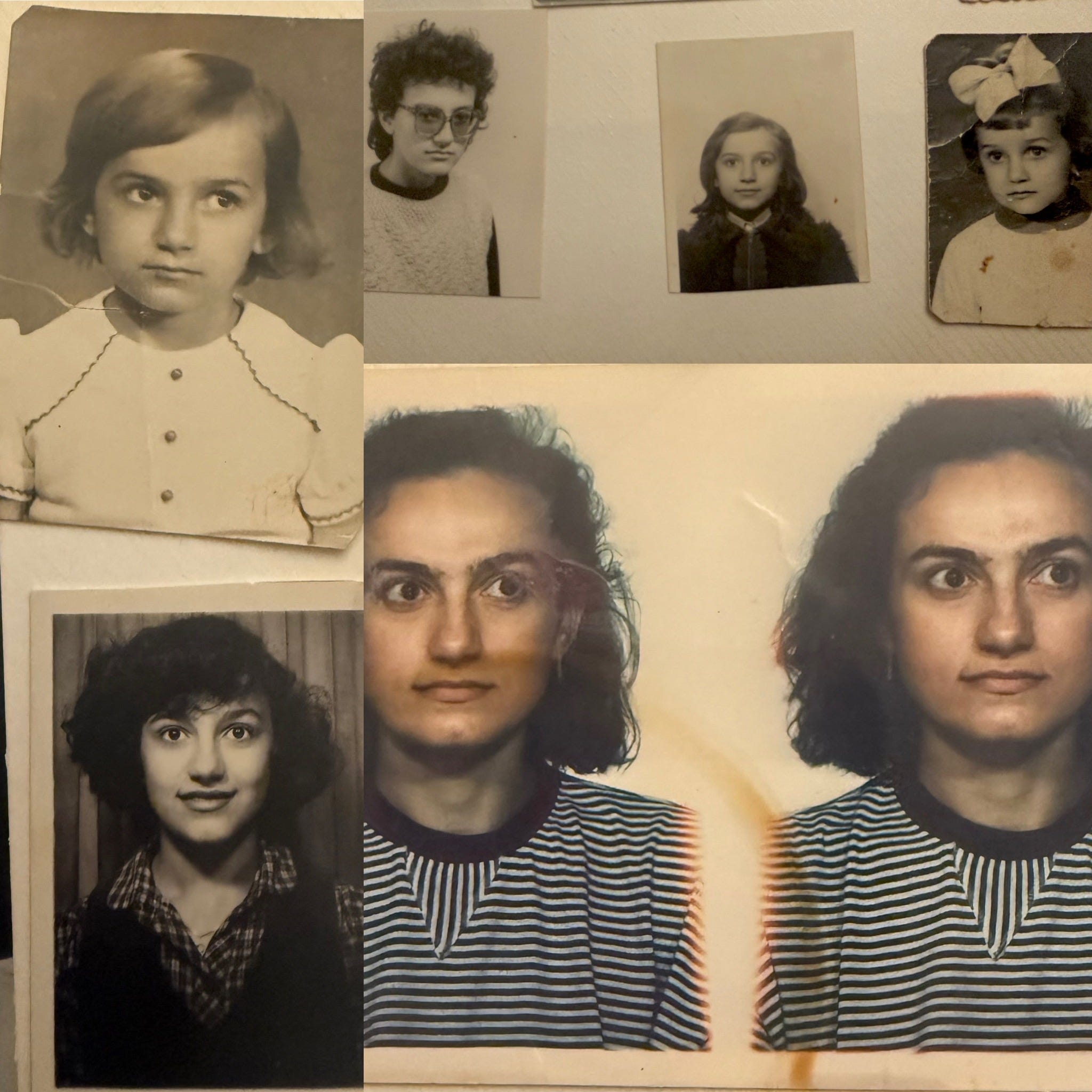
So I try to read one or two books a year in each language. And that’s when something strange happens. The first pages are a slog , sweating, rereading, doubting myself. But then, slowly, the language opens. And with it, the self that belongs to that language returns.
In Bosnian, I become expansive and lyrical.
In German, I am once again orderly, logical, efficient.
In English, I am confident and cautious at the same time, fierce and
generous.
All of them are me. All of them are true. And I take comfort in knowing that these other selves are still there, waiting, ready to speak when I call them back.
I enjoyed this so much, Vahida (as well as those photos - you still view the world with that slight side-eye that I love). How interesting to have these ways to be in the world through language, culture and code. For me, migrating from the US, Australia allowed me to be weird (eg to be myself). I’m more myself here than I was ever at home. My accent is my excuse to be different and I feel more accepted here than I ever felt at home.
Language is inseparable from culture, as your experience clearly shows. Also interesting to me is how someone (monolingual) will code-switch within their culture - perhaps related to social status/class, as a way to show they belong. Have you observed or experienced this, too?